Great Range
Mountain Guides
Book now
Backcountry
These remote routes located in the vast backcountry of the Adirondack Park represent the classic Adirondack climbing experience: long days, spectacular views and enjoyable movement. While these represent the more popular options, there are many others, let us know what you have in mind!
Book nowSummer/Fall
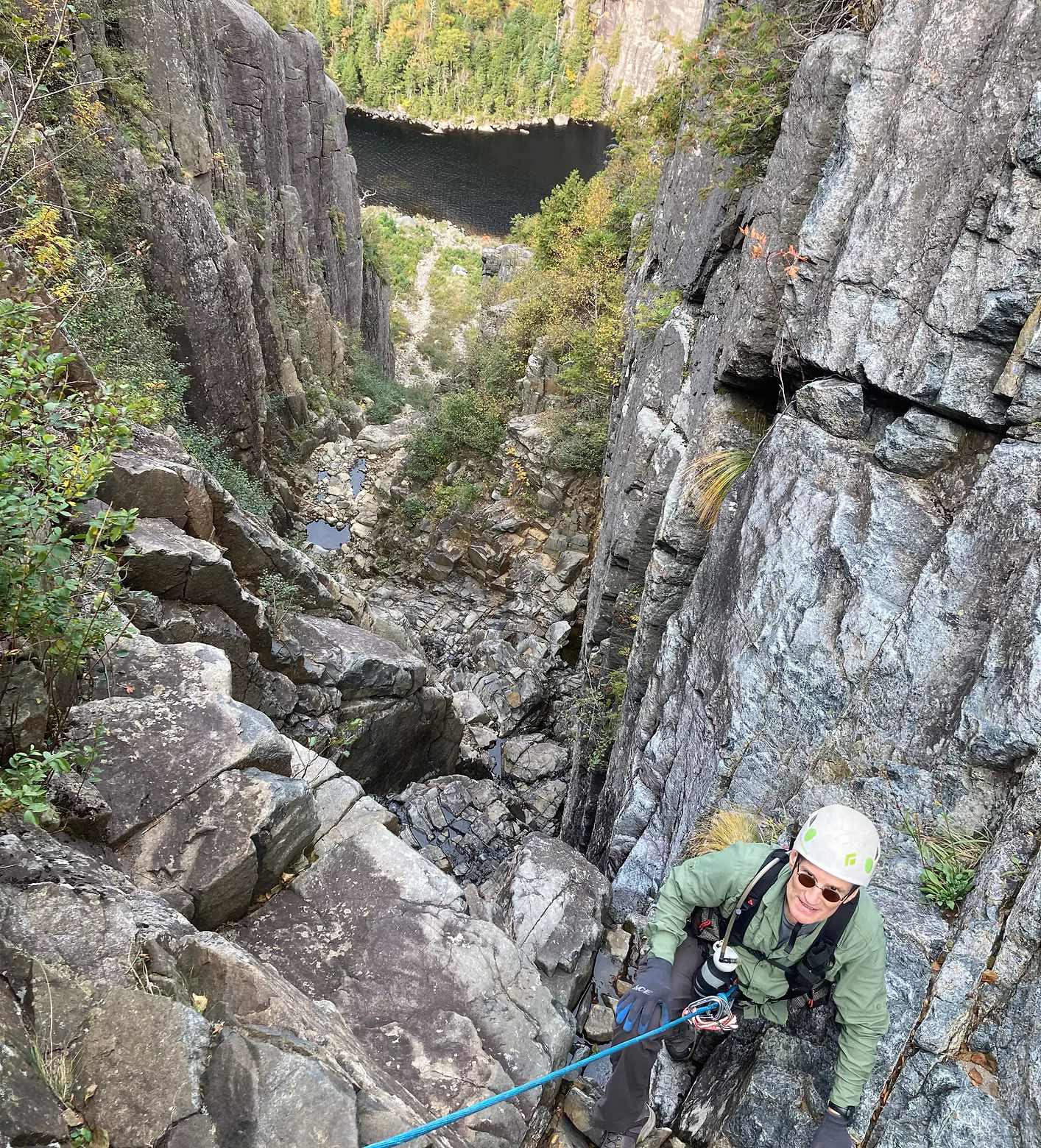
The Trap Dike on Mt. Colden needs little introduction. It is THE classic summer scrambling and mountaineering route in the High Peaks. With a long but moderate approach through the spectacular Avalanche Pass and a traversing descent past Lake Arnold, an ascent of the Trap Dike and Mt. Colden makes for a long day.
What to Expect
Most parties will take 10-14 hours to complete this objective and should be prepared for a strenuous day of hiking combined with over 1,500' of scrambling and climbing.
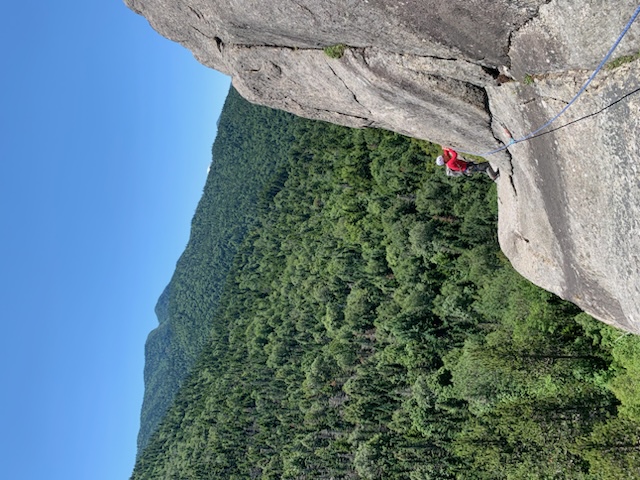
This diminutive peak, nestled at the end of the Great Range and on the outskirts of Keene Valley, is a great location for getting a taste of climbing in the Adirondack backcountry with a lower commitment level. A one and a half to two hour approach, almost entirely on a well-maintained hiking trail, will bring you to the summit cliff.
What to Expect
The "Old Route" is the most popular option, with four pitches of varied climbing leading directly to the open summit with great views. If time and ability allows, "Cock-a-doodle-doo" offers a great pitch of harder crack climbing.
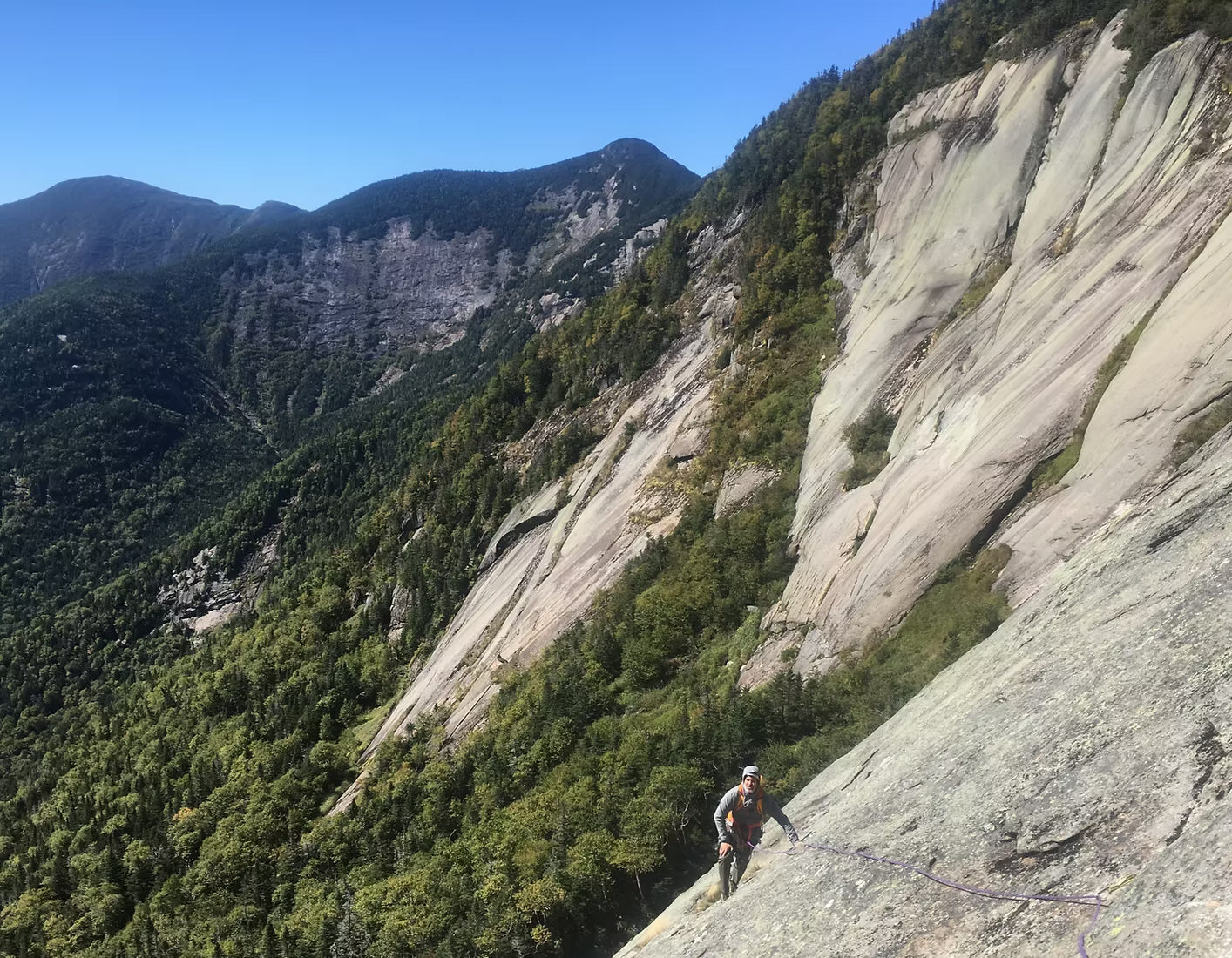
Gothics Mountain, located in the heart of the Great Range, is a spectacular peak. Each of its three prominent faces offer rewarding climbing in a stunning location, with the most common objective being the route "Gothic Arch" on the South Face.
What to Expect
Typically done in a 10-14 hour day, involving over 10 miles of hiking and some off-trail bushwhacking. Once on route, close to 800' of technical friction and face climbing with steeper overlaps at times. The finish brings you within minutes of the summit.
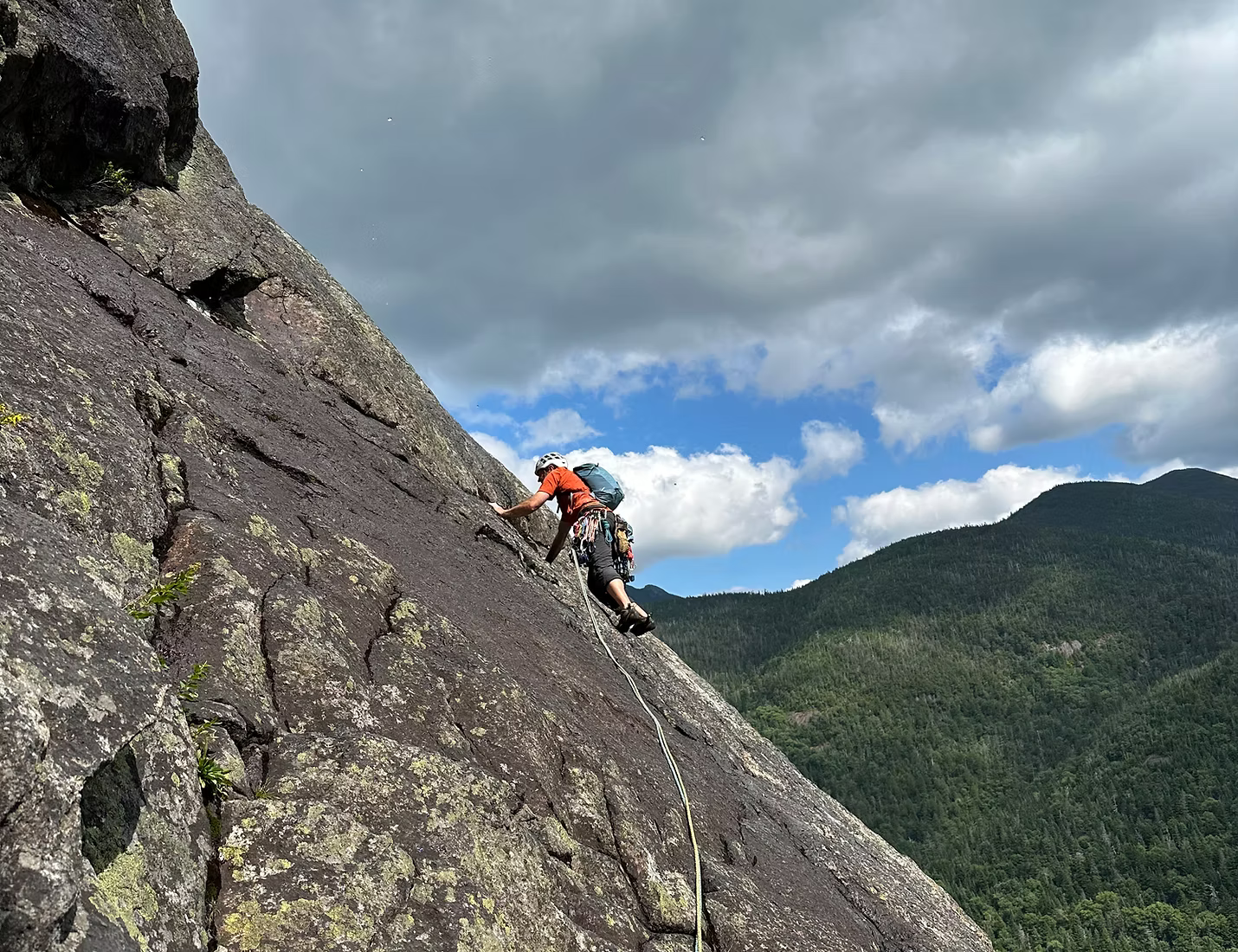
Wallface represents the largest expanse of backcountry rock in the northeast and is a complex cliff with multiple approach options. It is not uncommon for parties to hike all the way in and spend most of the day struggling to find the start of the route, much less climb!
What to Expect
The most popular route is "The Diagonal," but "Case Route," "Arch Madness," and "Out with the Boys Again" are all worthy of attention. No matter your choice, expect a long, 10-14 hour day filled with nearly continuous movement.
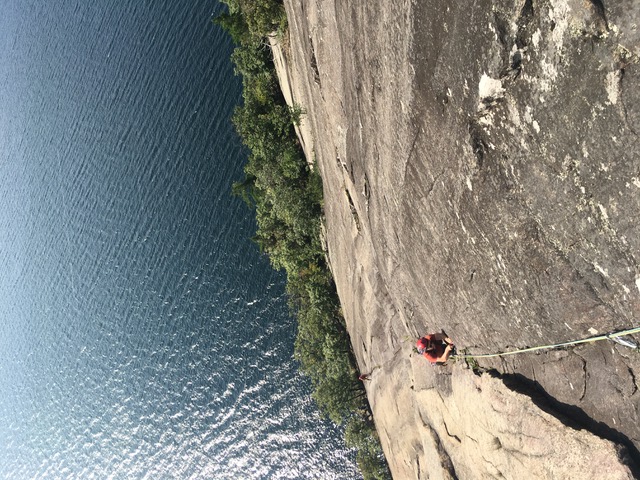
Rising directly out of the deep blue waters of Lake George, Rogers Rock is one of the most unique and quietly adventurous climbing venues in the Adirondacks. The formation is a massive 600-700 foot east-facing granite slab that feels more like a Yosemite-style friction face dropped into a lake than a typical Northeastern crag.
What to Expect
Expect a memorable full-value day on sweeping slab terrain, long pitches, and airy views over Lake George. It is an ideal option for climbers looking for a classic Adirondack backcountry outing with a very distinctive setting and style of movement.
Winter
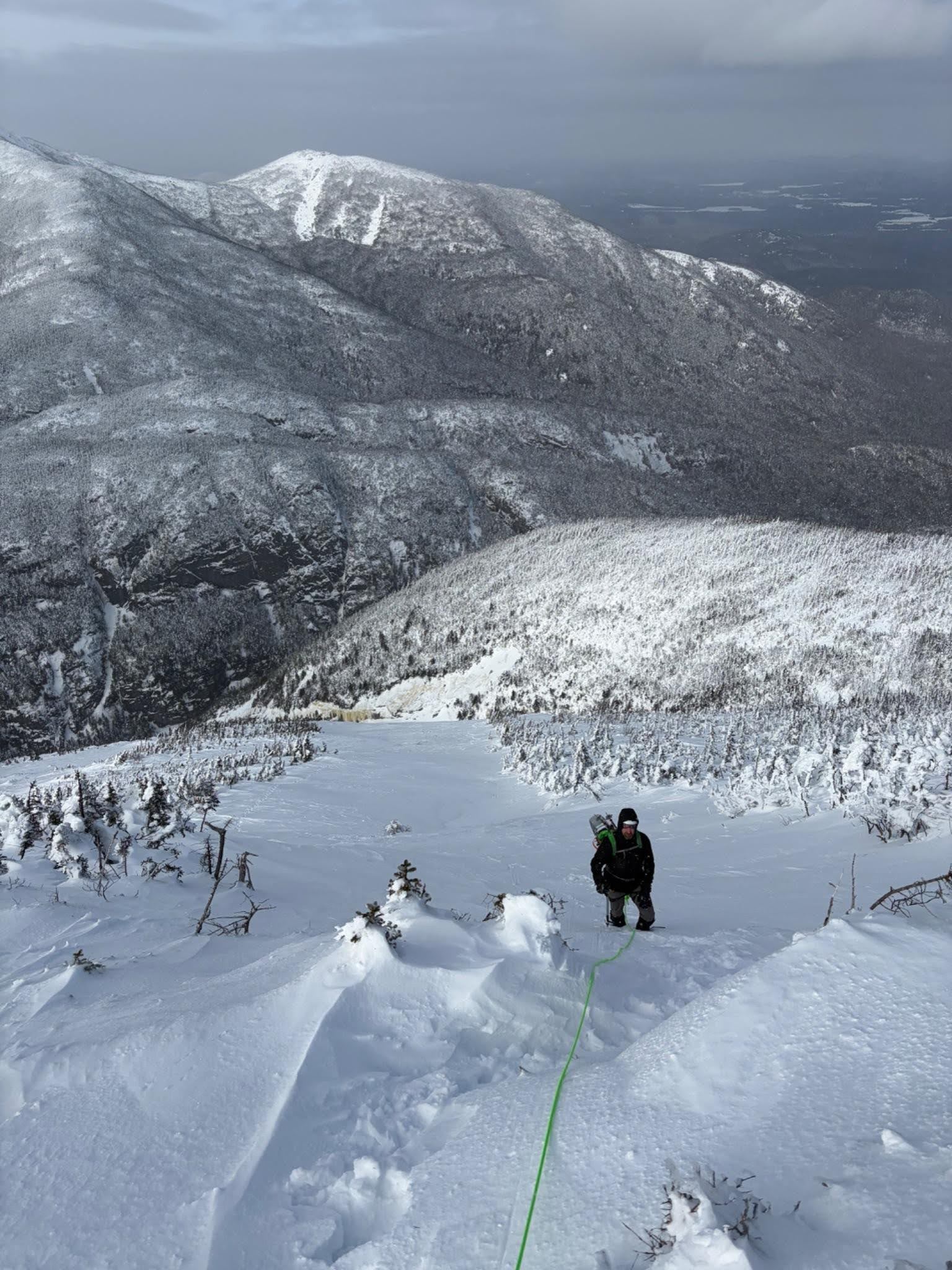
The classic Adirondack winter mountaineering objective! In winter, the Trap Dike on Mount Colden transforms into a true alpine climb. The narrow cleft of the dike becomes a frozen corridor of ice bulges, steep snow and occasionally rock steps. Above the dike, the route opens onto a sweeping slide that's often coated in wind hardened snow or ice, fully exposed to weather and requiring careful navigation to the summit.
Winter Option
With rapidly changing Adirondack winter conditions, the Trap Dike in winter is widely regarded as a serious, alpine-style objective.
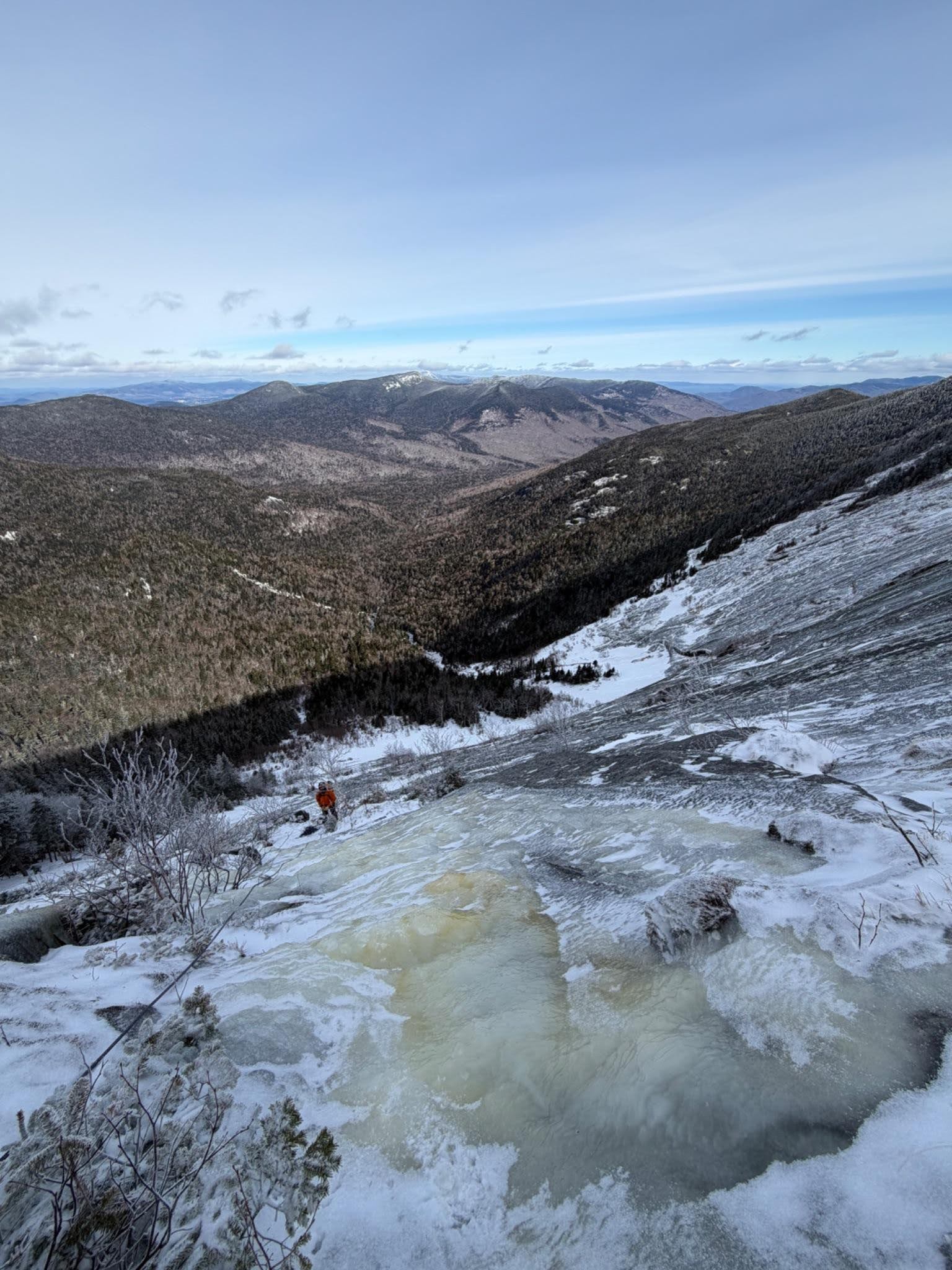
In winter, the North Face of Gothics rises as one of the Adirondacks' most striking alpine-style objectives, a broad expanse of open terrain with snow and ice runnels that demand confident movement on steep snow and ice. The route begins with a long approach before breaking out onto open terrain where the face really comes into view. Once on the face climbers often encounter sections of firm neve, thin water ice and snow, often requiring careful tool placements. All this while fully exposed to shifting mountain weather.
Winter Option
The North Face of Gothics in winter offers a true alpine experience demanding endurance, technical knowledge, and persistance in a remote and unforgiving environment.
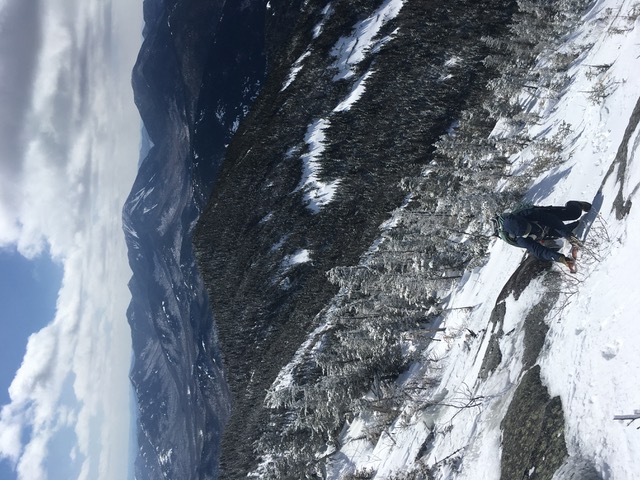
In winter, Eagle Slide on Giant Mountain offers a long, elegant, alpine line that climbs a sweeping expanse of open, exposed terrain. The approach is steep but the 3 mile distance is comparatively shorter than many other backcountry routes in the High Peaks. Once at the base of the route you’ll be treated to a moderate snow/ice (WI2, 800ft) route that really rewards efficient movement.
Winter Option
With its length, exposure and moderate difficulty, Eagle Slide in winter is a classic Adirondack alpine ascent. The Eagle Slide is best suited for those comfortable moving on long stretches of moderate, but consequential terrain.
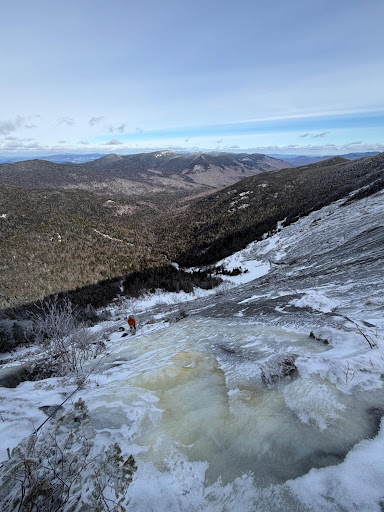
In winter, Avalanche Pass becomes a dramatic alpine corridor funneling deep snow, howling wind and cold air between the towering walls of Mount Colden and Avalanche Mountain. The most popular routes, Avalanche Mountain Gully (WI4-, 250ft) and The Adirondike (WI3+, 250ft) are true backcountry gems! An ascent of one, or both, of these routes is a real prize guarded by a 5 mile approach. Doubtful there will be a line of folks queuing up for these routes.
Winter Option
In winter, Avalanche Pass is a backcountry ice climber's dream. The 5 mile approach brings you to one of the Adirondacks' most dramatic landscapes. A narrow mountain pass with ice dripping from the steep cliffs.
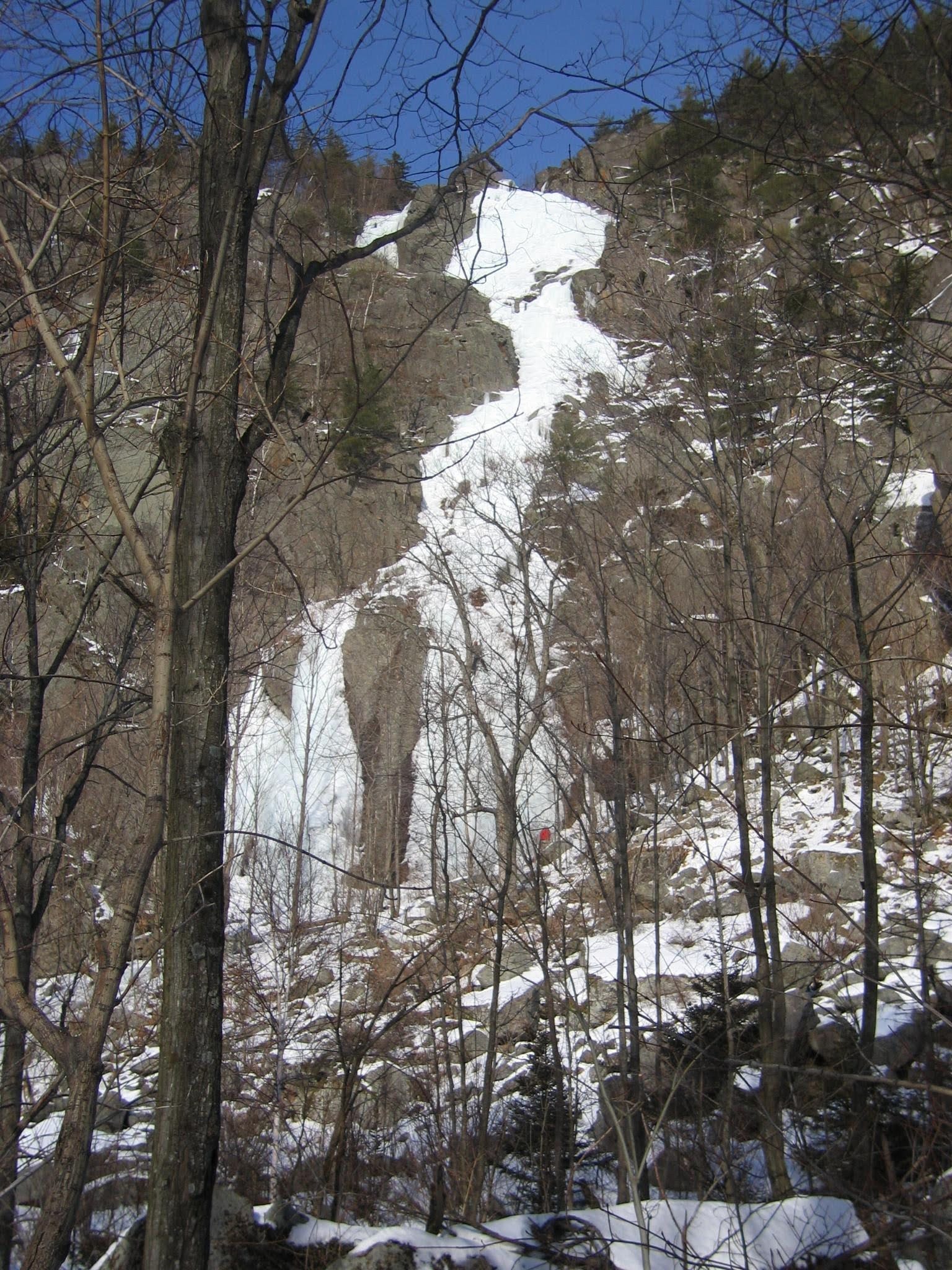
This route has been called the best long moderate route in the Adirondacks by more than one experienced Adirondack climber! Although the route itself is moderate in difficulty (WI3+) and length (500ft), the overall experience is comparable to many other “big” east coast alpine routes. With the climbing guarded by an approach around 5 miles, you're almost guaranteed solitude.
Winter Option
In winter, Pharaoh Mountain offers an alpine-style ascent, where a long approach through the remote Pharaoh Lake Wilderness sets the tone for a day defined by isolation and endurance.
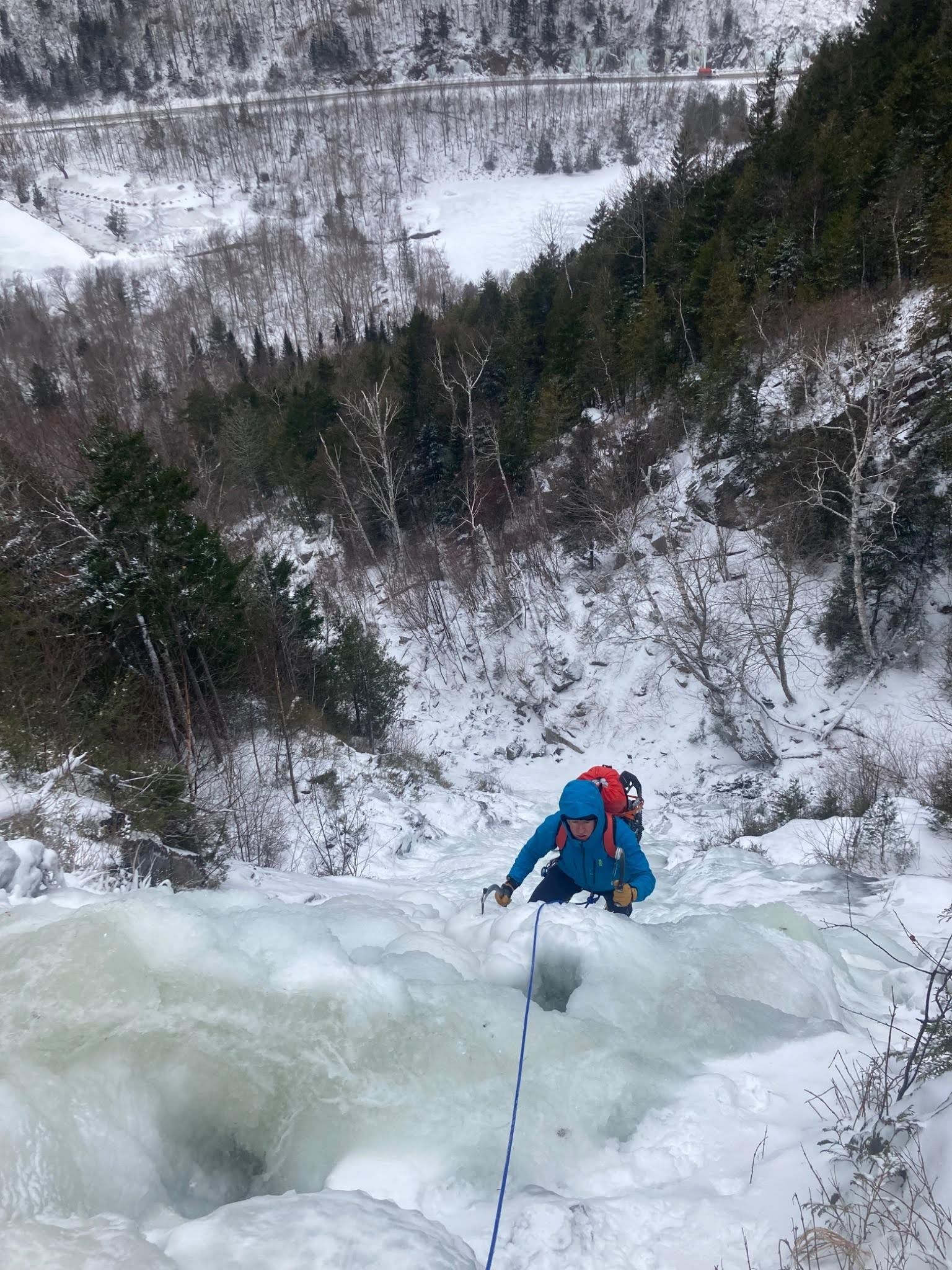
In winter, the Cascade Slide on Cascade Mountain offers an alpine style climb (WI2+ 1,000ft) that can be taken almost all the way to the summit of Cascade mountain. Or for those looking to dip their toes into alpine climbing, the first 350ft of the slide make for a great, less committing objective. The approach is relatively short by Adirondack standards, but once on the slide, even though it’s not far from the road, you’ll experience the solitude that makes Adirondack climbing so special.
Winter Option
With its accessibility and obvious line, the Cascade Slide in winter is a quintessential Adirondack alpine route: compact but serious, rewarding efficiency and respect for rapidly changing mountain conditions.
Rates
| Half Day | Full Day | Extended Day | |
|---|---|---|---|
| 1 Guest | $275 | $375 | $500 |
| 2 Guests | $350 | $500 | $600 |
| 3 Guests | $450 | $600 | — |
| 4 Guests | $500 | $700 | — |
Half Day
4 hours or less · Typically 8:30-12:30
Full Day
7 hours · Typically 8:30-3:30
Extended Day
8+ hours · Often before 8:30 and after 4:30
What's Included
Instruction and technical gear — Rock: helmet, harness, climbing shoes, and belay device/carabiners. Ice: helmet, harness, belay device/carabiners, ice axe/tools, crampons & snowshoes. Technical winter boots are included for a $30 additional fee.
What's Not Included
Winter clothing system, food, lodging and gratuities.
Overnights
Many of these routes lend themselves well to overnight trips, which can transform a long day into a more relaxed and immersive experience. Ask us about overnight options when booking.